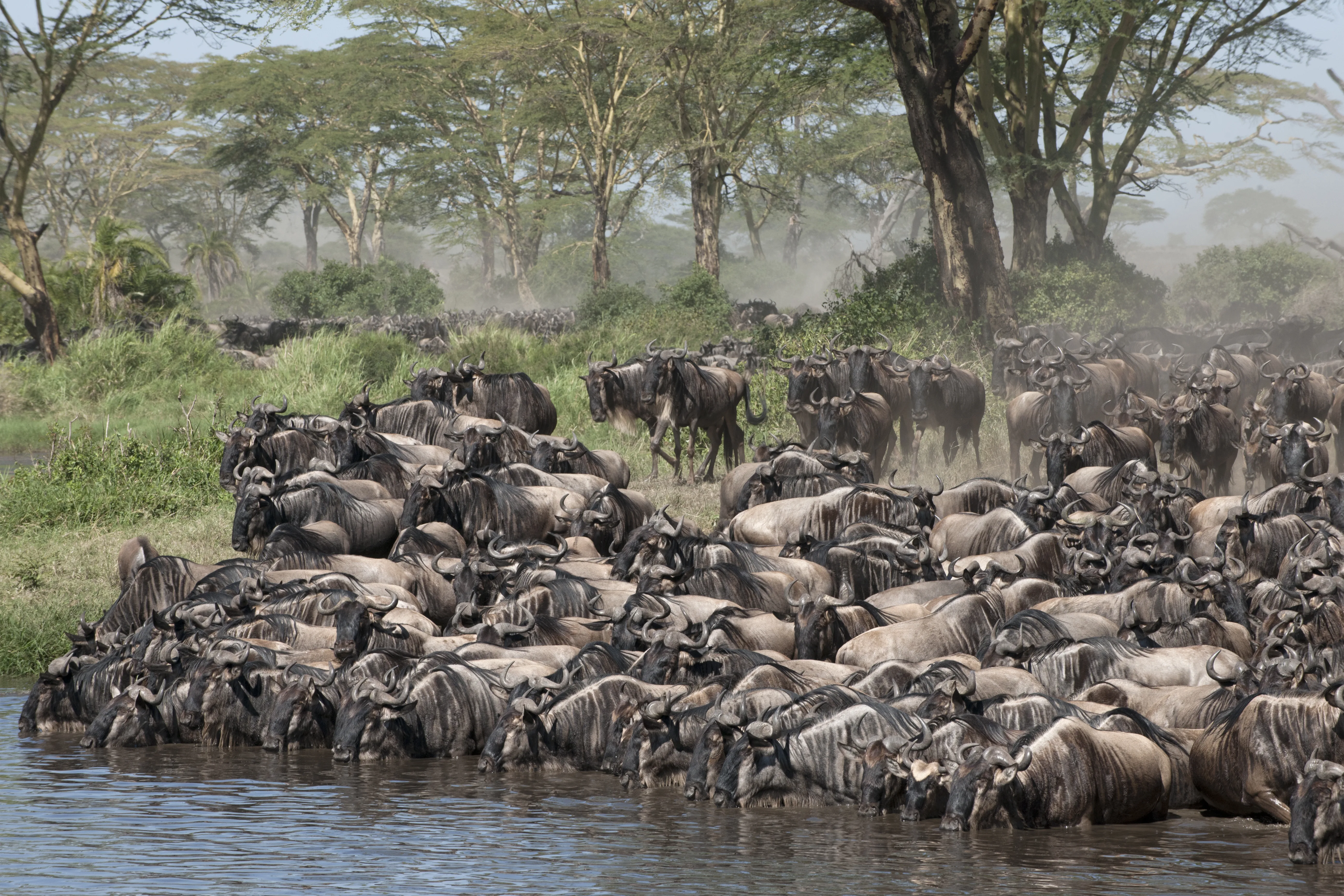
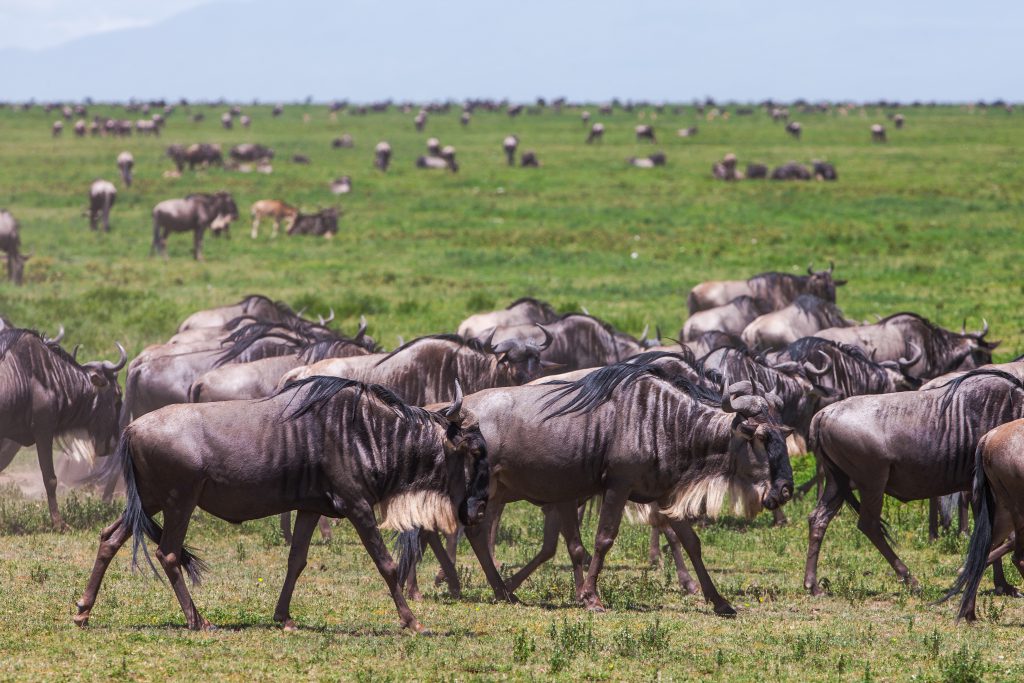
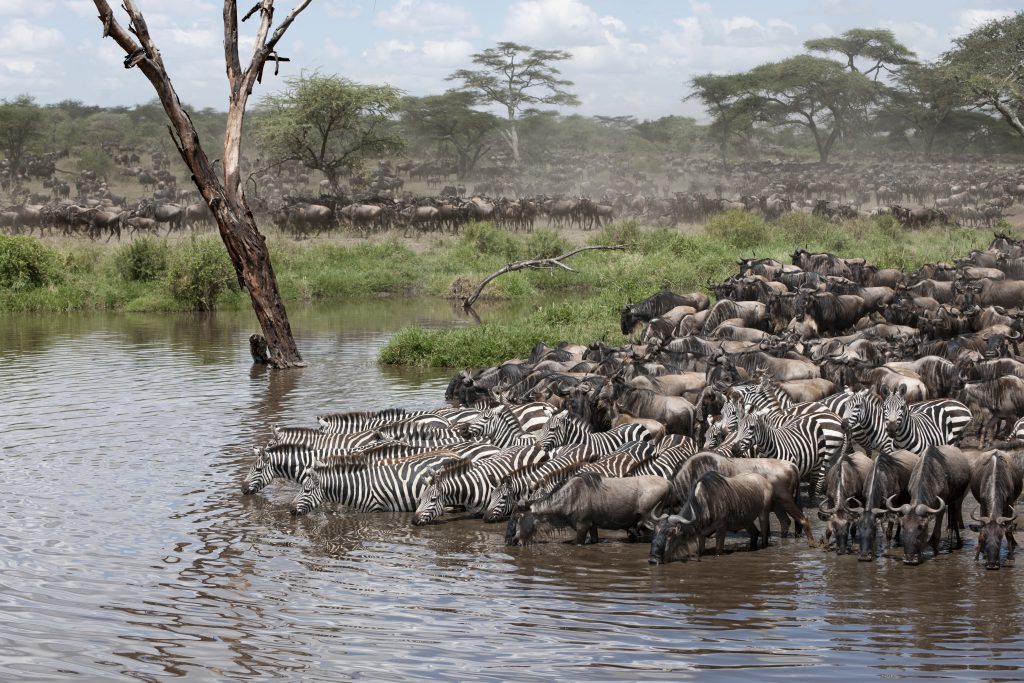
Around one and a half million wildebeest, with zebra and gazelle, walk a great circle through the Serengeti and the Masai Mara every year. Here is where they usually are, and when to go.
The herds' usual loopThe chosen monthPark boundaryRiver
Month 1 of 12
January
Calving begins
Ndutu & the southern short-grass plains
The herds spread across the mineral-rich short-grass plains around Ndutu, and the first calves begin to drop. A green, fertile calm before the great birth peak.
The year's most dramatic wildlife event: around half a million calves are born in just a few weeks. Lions, cheetahs and hyenas are never far - raw, unforgettable action.
The great columns form and drift north-west through the central Serengeti under the long rains. Green, quiet and low-season - beautiful for photography.
No. The migration follows the rain and fresh grass, so the timing shifts by a few weeks from year to year. The months on this page are the usual pattern; we watch the reports from the camps and plan your days around where the herds actually are.
Grumeti crossings usually happen in June. The Mara River crossings run from July to October, busiest in August. A crossing can take hours of waiting, so give the river at least three nights.
The herds spend most of the year in Tanzania's Serengeti and cross into Kenya's Masai Mara for a few weeks between August and October. Most of the loop, including the calving, is on the Tanzanian side.
It depends on what you want to see: February for calving and predators, June for the Grumeti, August for the Mara crossings, and the green months for fewer vehicles and lower rates.
Yes. Most of our travellers do: climb first, then fly or drive to the Serengeti, and finish on a Zanzibar beach. We plan the whole journey as one.
Your front-row seat
Be there when the herds arrive
Tell us your month and we will place you where the herds are likely to be, with the right camp and enough days to wait for the moment.