









Safaris

You visit: Lake Manyara · Ngorongoro · Serengeti · Tarangire
5 Days Budget Camping Safari – Tarangire, Serengeti, Ngorongoro & Lake Manyara
- Days
- 5
- From
- $1,250pp
- Style
- Budget
The route
4 stops · about 770 km by road
Drawn from the itinerary below: drives on the main safari roads, flights as dashed arcs, climbs as a dotted footpath. Distances are approximate.
The classic Northern Circuit on a budget. Four days of private 4x4 game drives through Tarangire, the Serengeti and the Ngorongoro Crater, with full-board tented camping.
This 4-day budget camping safari is an authentic, adventure-style introduction to Northern Tanzania’s classic wildlife circuit – Tarangire National Park, the Serengeti, and the Ngorongoro Crater. You travel privately in a 4×4 safari Land Cruiser with a pop-up roof, guided throughout by a professional English-speaking driver-guide.
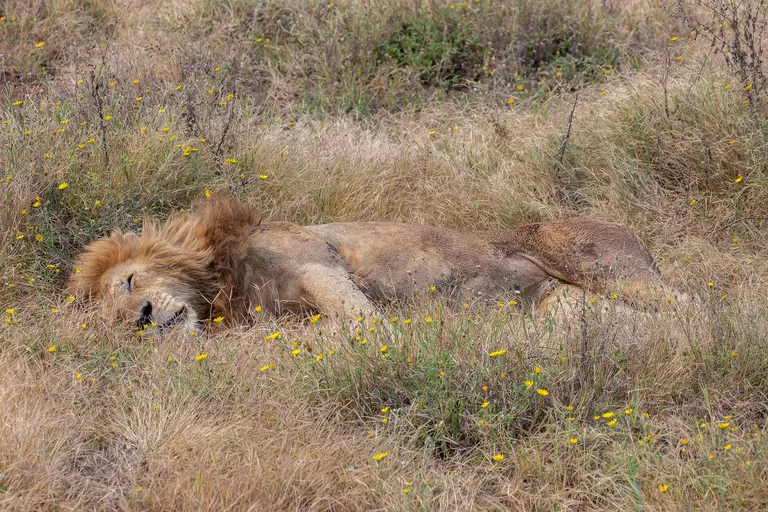
The journey begins among the elephant herds and giant baobabs of Tarangire before heading out onto the great plains of the Serengeti in search of lion, cheetah, and the herds they follow. The safari ends with a descent into the Ngorongoro Crater, a natural wildlife amphitheatre where lion, elephant, buffalo, and black rhino share the crater floor.
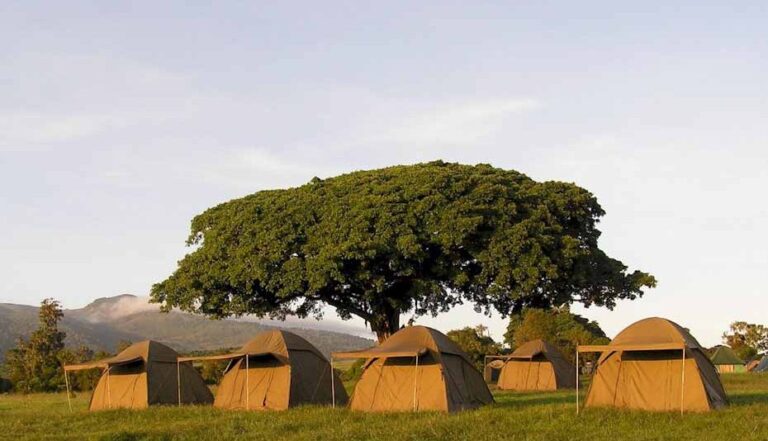
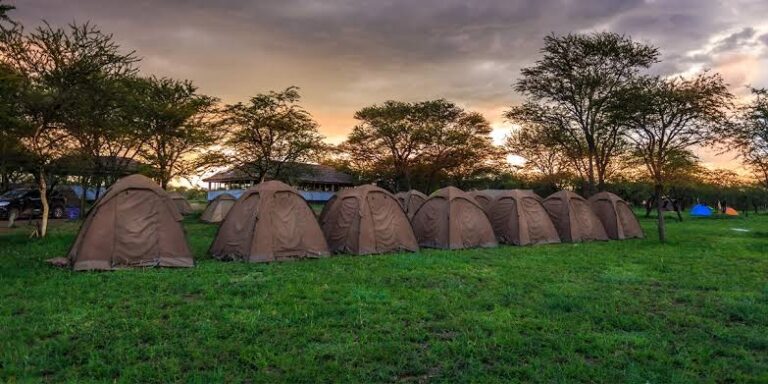
Nights are spent under canvas at tented campsites on a full-board basis while on safari, making this a great-value option for adventurous travellers and small groups of up to six guests sharing one vehicle.
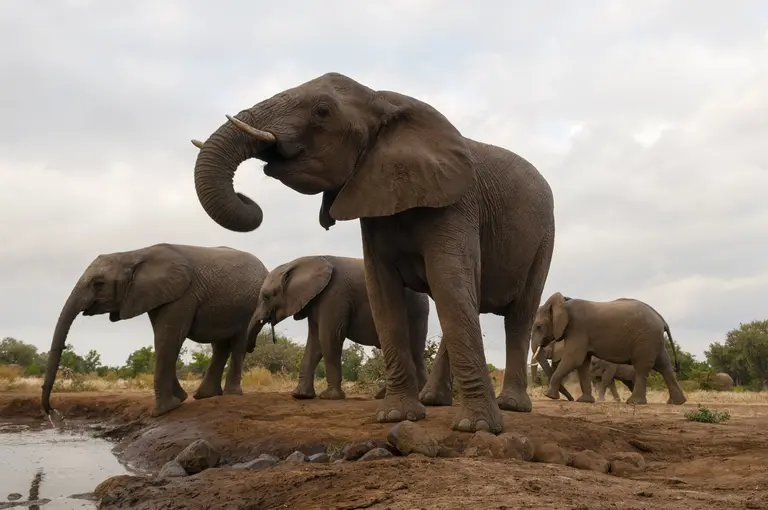
Pickup from your Arusha hotel at 08:30 and drive to Tarangire National Park, known for its large elephant herds, ancient baobab trees, and wildlife along the Tarangire River. After a picnic lunch and an afternoon game drive among elephants, giraffe, and lions, return to camp for dinner and overnight. Approx. 2.5 hours driving.
After breakfast, depart for the Serengeti National Park. Enjoy a game drive across the plains in search of large predators and the great herds of herbivores they follow, before dinner and overnight at your Serengeti camp. Approx. 4.5 hours driving.


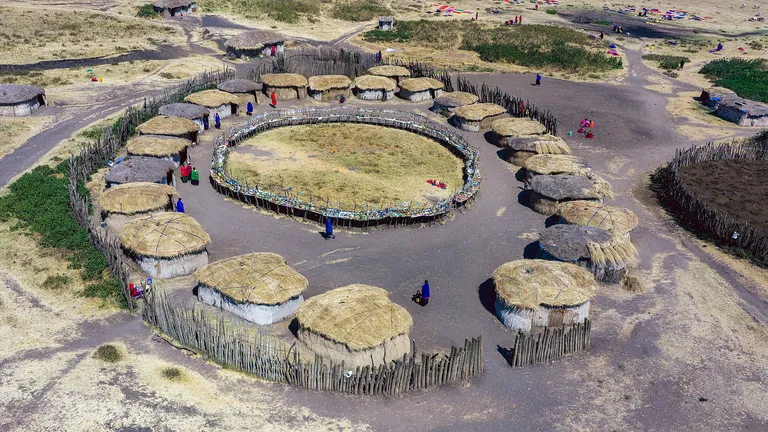
After breakfast, enjoy a morning game drive in the Serengeti, then drive toward the Ngorongoro highlands with a picnic lunch. An optional Maasai village visit and a stop at Olduvai Gorge are available en route at extra cost. Dinner and overnight at your Ngorongoro camp.

After breakfast, descend into the Ngorongoro Crater for around six hours of game viewing on the crater floor, home to lion, leopard, rhino, elephant, and buffalo. Later, ascend from the crater and drive back to Arusha, where the safari ends. Approx. 3.5 hours driving.
Every day of this itinerary is tailor-made and can be shaped around your dates, pace and budget. When you are ready, our team handles every detail - you simply arrive and enjoy.
Yes – unless stated otherwise, our safaris are private departures for your party only, with your own driver-guide and 4×4 vehicle. You set the pace and can adjust game-drive times with your guide each day.
Your quote covers park and conservation fees, accommodation on the stated board basis, a professional English-speaking driver-guide, a private safari vehicle with a pop-up roof, game drives per the itinerary, and drinking water in the vehicle. International flights, visas, travel insurance, tips and personal expenses are excluded.
Tanzania is a year-round destination. June to October offers classic dry-season game viewing; the green season (November to May) brings lush scenery, newborn animals and fewer crowds. The Great Migration moves through the Serengeti all year – tell us your dates and we will advise where the herds are likely to be.
Absolutely. Every itinerary is a starting point – we tailor the parks, pace, lodges and length to your interests and budget. Just let us know what you have in mind and we will build it around you.
Once you are happy with the plan we confirm availability and send a booking form and invoice. A deposit secures your dates, with the balance due before travel. We confirm exact amounts and payment options when you enquire.
Most visitors need a tourist visa for Tanzania (available online or on arrival) and a yellow-fever certificate if arriving from a risk country. We recommend consulting a travel clinic about malaria prevention and routine vaccinations well before departure.
You visit: Lake Manyara · Ngorongoro · Serengeti · Tarangire
You visit: Kilimanjaro · Ngorongoro · Serengeti · Tarangire
You visit: Lake Eyasi · Ngorongoro · Serengeti · Tarangire
Tell us your dates and what matters most - our team designs every journey by hand and replies within 24 hours, seven days a week.
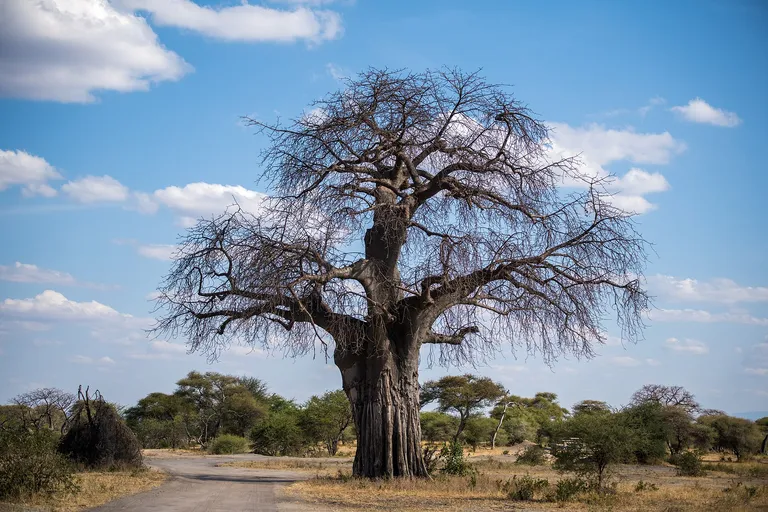
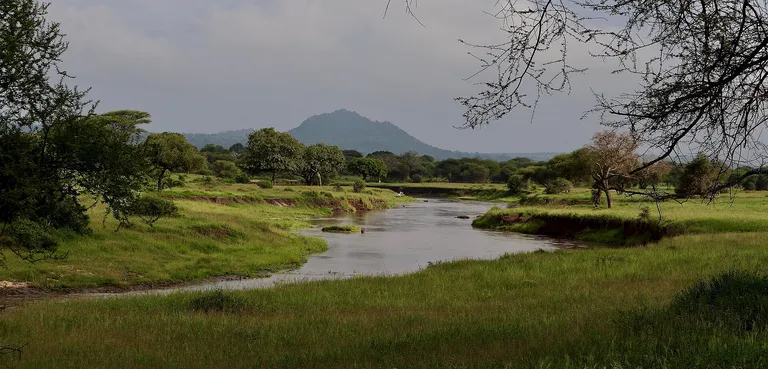
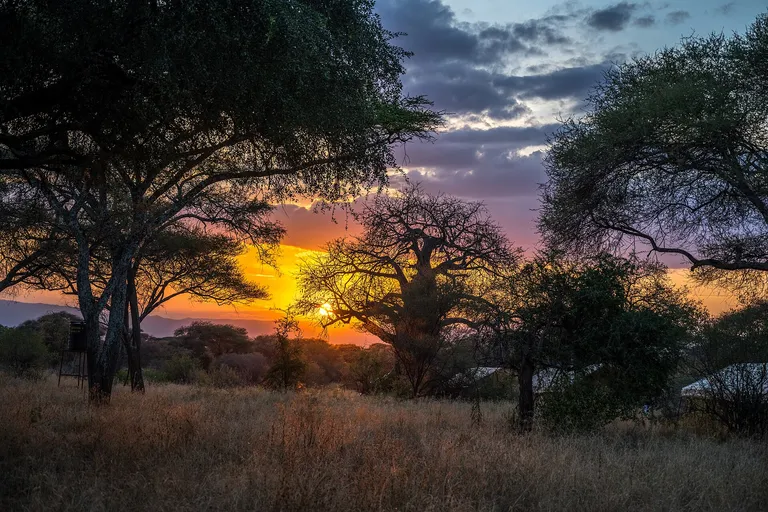
Tarangire is the park people tend to underrate until they get there. It is a land of huge, ancient baobab trees, wide grassy swamps and the Tarangire River, which keeps flowing when the rest of the region dries out. In the dry season that river pulls in wildlife from far around, and the result is some of the biggest elephant herds you will see anywhere in northern Tanzania. It is also close to Arusha, which makes it an easy first stop on safari.
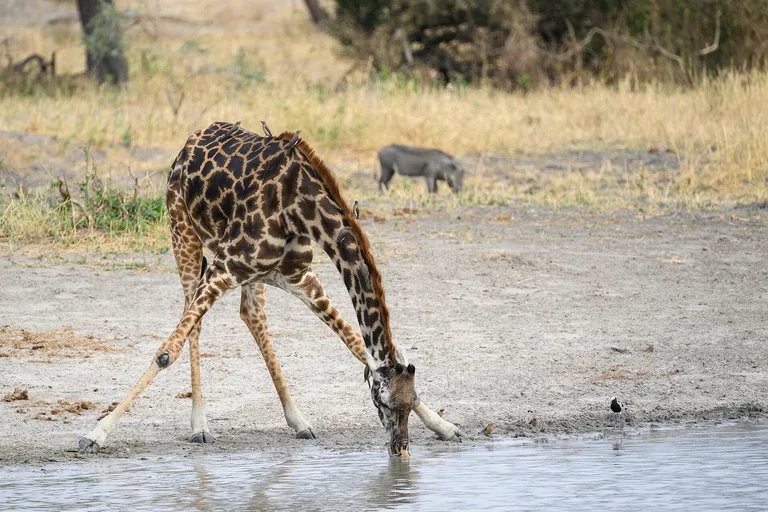
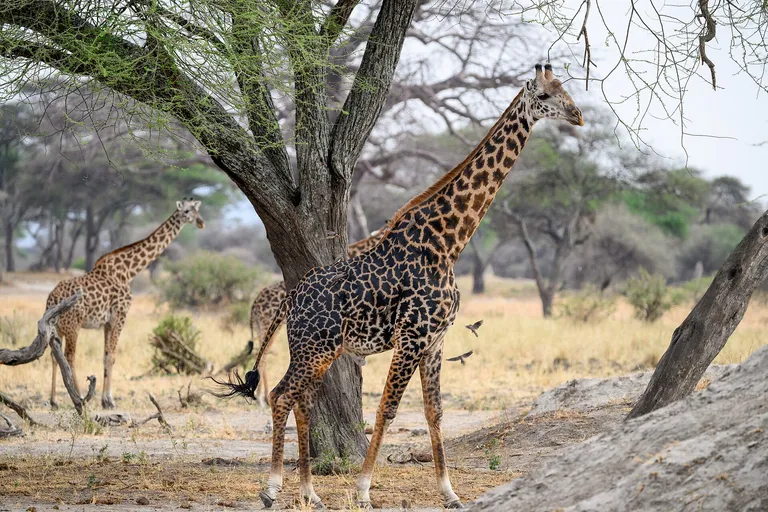
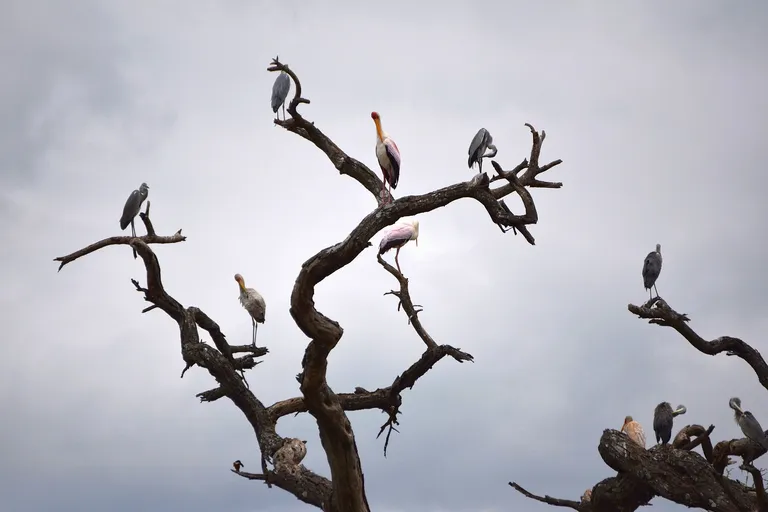
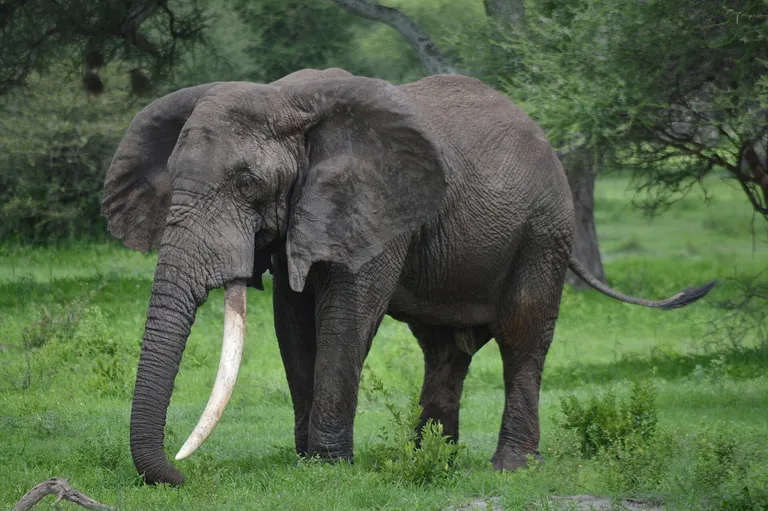
Elephants are the main reason to come. Families of dozens are a normal sight, walking in single file down to the river or dusting themselves under the baobabs. Alongside them you can expect buffalo, giraffe, zebra, wildebeest, impala, waterbuck and dik-dik, plus lions that know the herds will come to drink. Look out for species that are harder to find further north, such as fringe-eared oryx and lesser kudu. Tarangire is also excellent for birds, from colourful lovebirds and hornbills to big ground birds like the kori bustard and ostrich.
Even in the wetter months, Tarangire is worth a day if it is on your way. Our Tanzania weather guide explains what each month is like.
Tarangire is roughly two to two and a half hours from Arusha by road, almost all of it on tarmac, heading south towards Babati. That means you can leave Arusha after breakfast and be on a game drive before lunch. It is also a simple drive on to Lake Manyara and the Ngorongoro highlands afterwards.
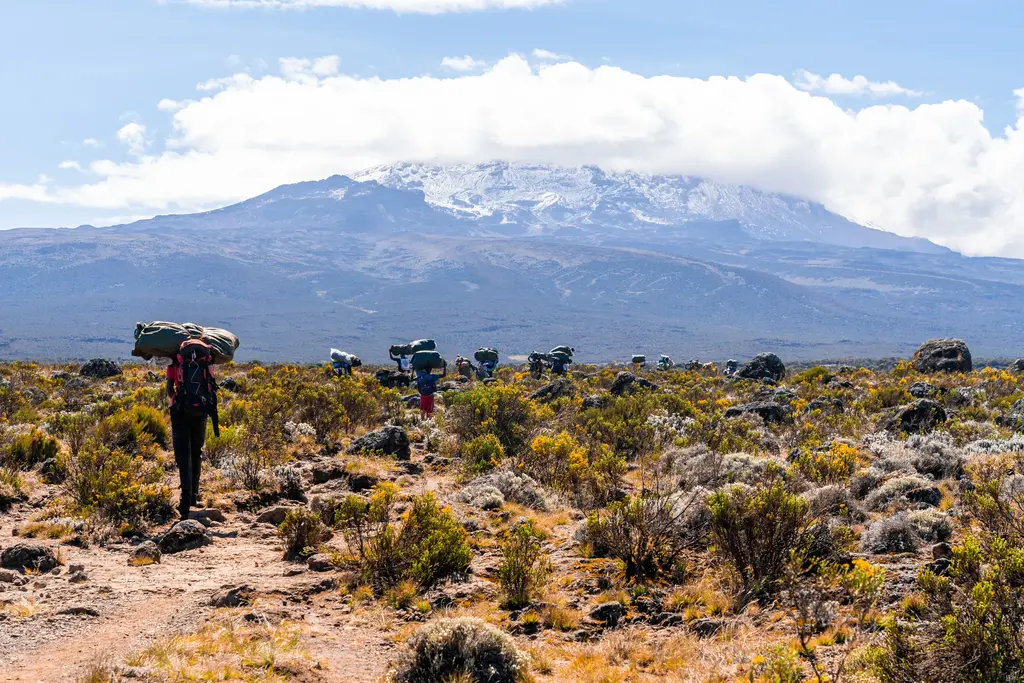
We often start a Northern Circuit safari here. A night or two in Tarangire, then Ngorongoro, then the Serengeti is a classic route that builds as you go. If you have only a few days after climbing Kilimanjaro, Tarangire and the crater make a strong short safari with no flights needed. You can then fly from Arusha to the coast for a few days on Zanzibar.
There are lodges and tented camps both inside the park and on its edges. Camps inside put you close to the river for early starts, while some of those outside the boundary can offer guided walks and other activities, depending on the camp and local park rules. We will suggest which suits you, depending on how much time you have and how you like to travel.

The Serengeti is big, open country. Its name comes from the Maasai word for plains that seem to run on forever, and once you are out on the short grass south of Seronera you will see why. The park covers about 14,750 km² and is a UNESCO World Heritage Site, but numbers do not say much. What matters is that this is one of the few places left where very large herds still move freely, and the lions, cheetahs, leopards and hyenas that follow them are part of everyday life on a game drive.
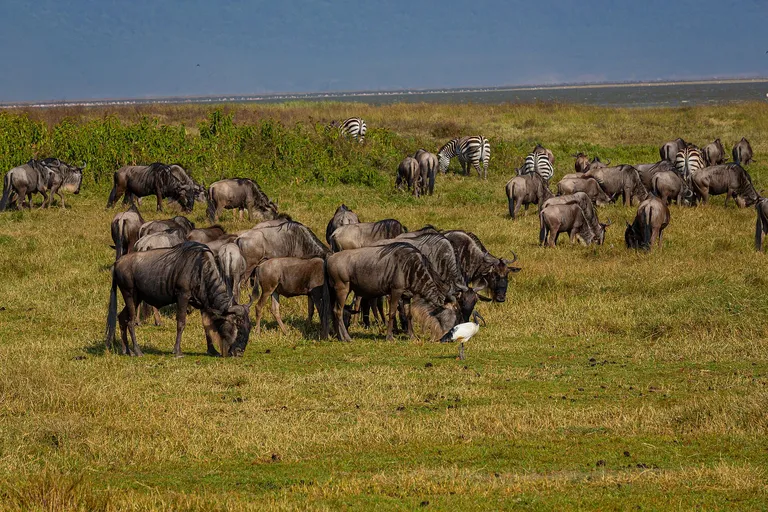
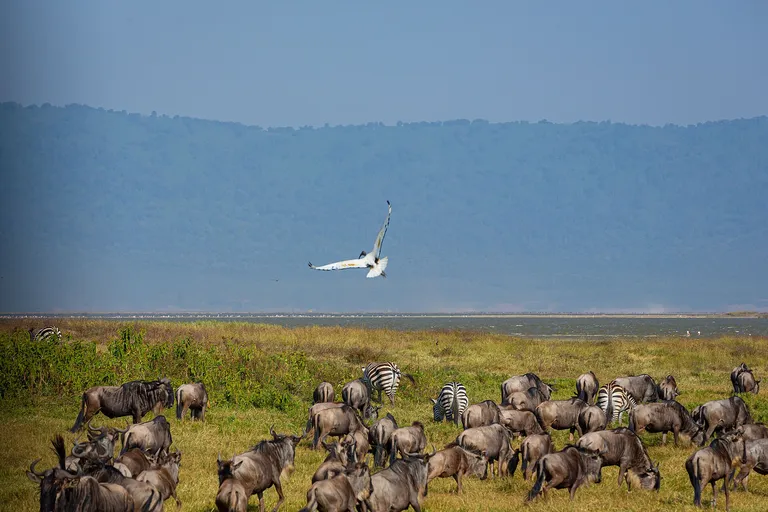
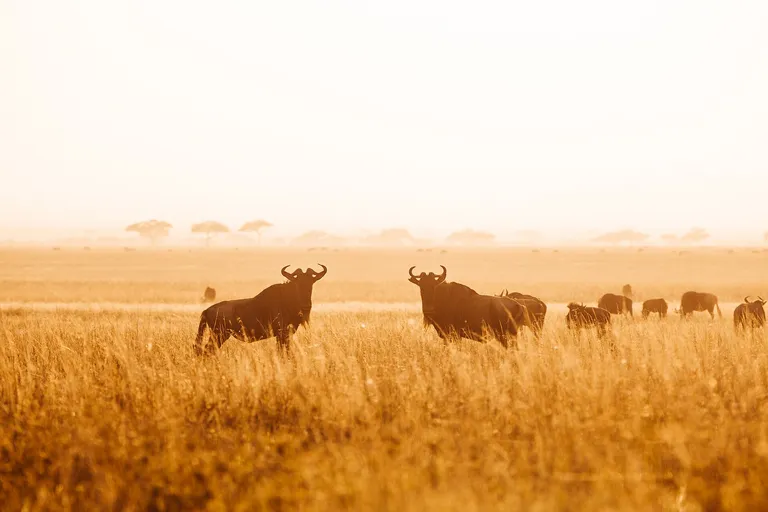
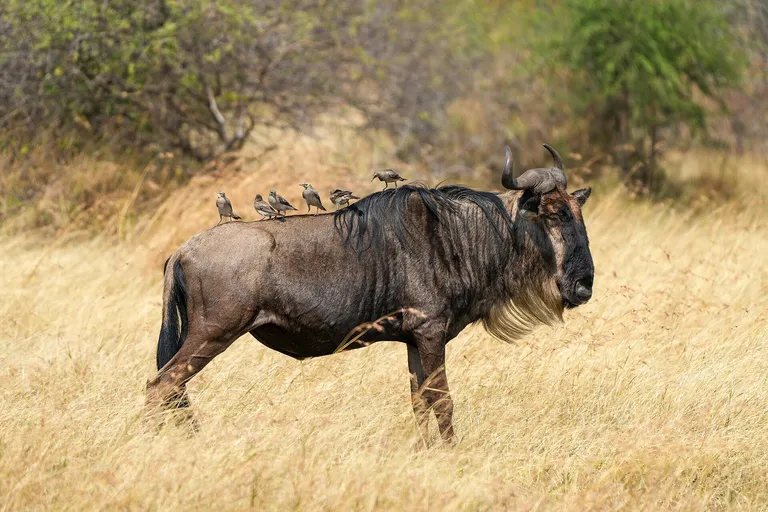
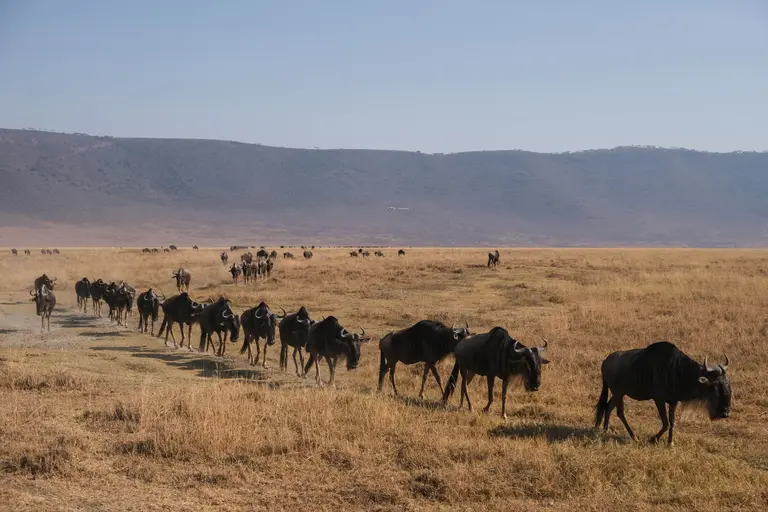
Wildebeest and zebra get the headlines, but they are only one part of it. Expect giraffe, buffalo, elephant, topi, hartebeest, Thomson’s and Grant’s gazelle, and a long list of birds, from secretary birds striding through the grass to vultures circling a kill. The central Seronera area, with its river valley and rocky kopjes, is well known for big cats, and leopards are often found resting in the sausage trees along the watercourses. Black rhino live here too, but they are rare and you should treat a sighting as a bonus.
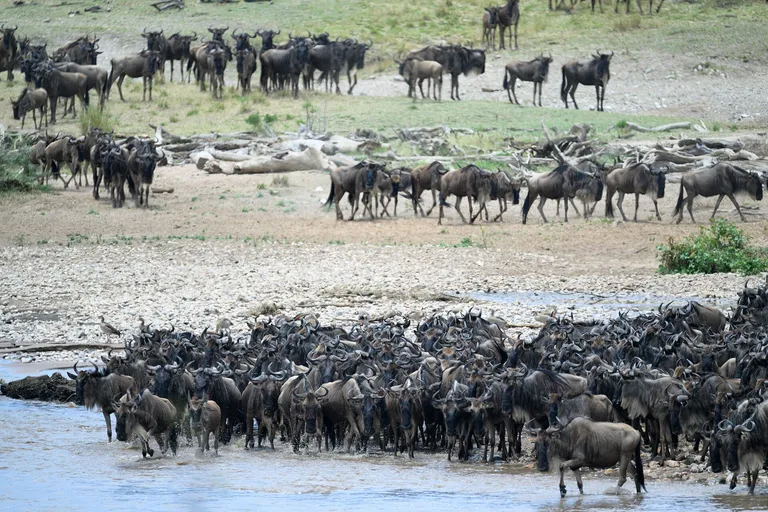
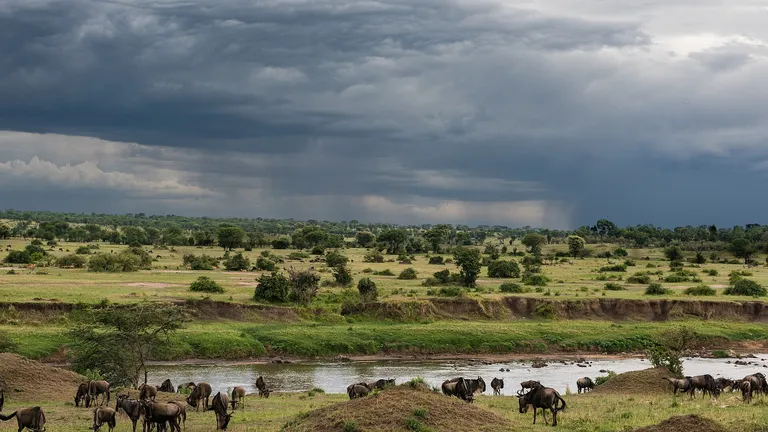
There is no bad month in the Serengeti, only different ones. The herds follow the rain in a rough loop through the year:
The pattern shifts every year with the rains. Our Great Migration tracker shows where the herds are likely to be month by month, and the Tanzania weather guide explains the seasons in more detail.
By road, central Serengeti is a full day from Arusha, roughly seven to eight hours with stops, passing Lake Manyara and the Ngorongoro highlands on the way. Most travellers break the drive with a night near the crater. If time is short, light aircraft fly from Arusha to several Serengeti airstrips in about one to two hours, depending on which part of the park you are heading for and how many stops the plane makes.
Most of our Northern Circuit safaris build towards the Serengeti and give it at least two or three nights, because the distances inside the park are large. A common shape is Tarangire, then Ngorongoro, then the Serengeti, then a flight back to Arusha or straight to the coast. After a Kilimanjaro climb, a few days sitting in a vehicle watching lions is a very good way to rest tired legs.
You can choose between permanent lodges, fixed tented camps and seasonal mobile camps that move to follow the herds. Mobile camps put you close to the action in migration season, while lodges in the central area suit families and first-time visitors. We will match the camp to the month and to where the animals are likely to be.
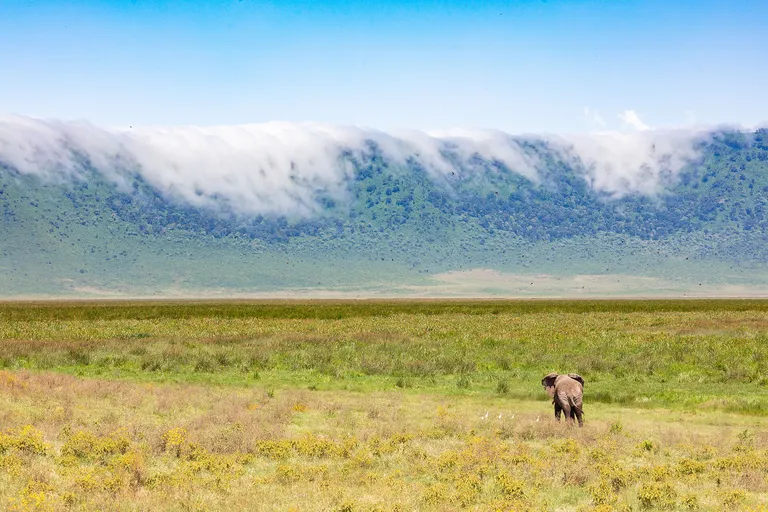
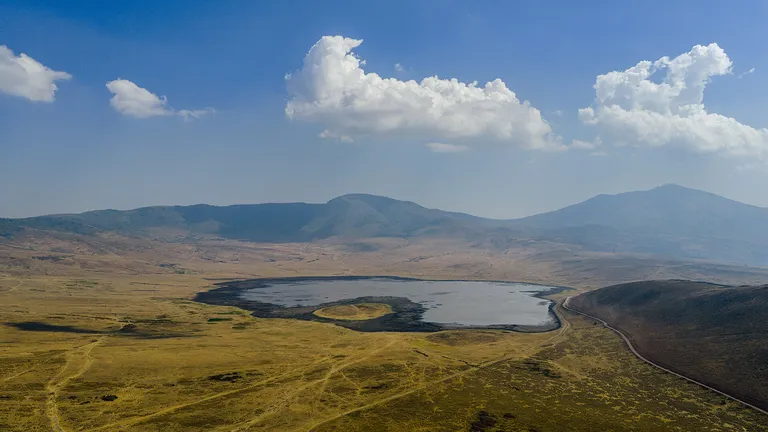
The Ngorongoro Crater is the floor of an old volcano that collapsed in on itself, leaving a bowl about 260 km² across and roughly 600 m deep. Standing on the rim on a clear morning, you look down onto grassland, a soda lake, swamps and patches of forest, all ringed by steep green walls. Because so much wildlife lives inside such a small space, a single day on the crater floor can show you more species than a week in many other places. It is part of the Ngorongoro Conservation Area, a UNESCO World Heritage Site where Maasai families still graze their cattle alongside the wildlife on the highlands around the crater.
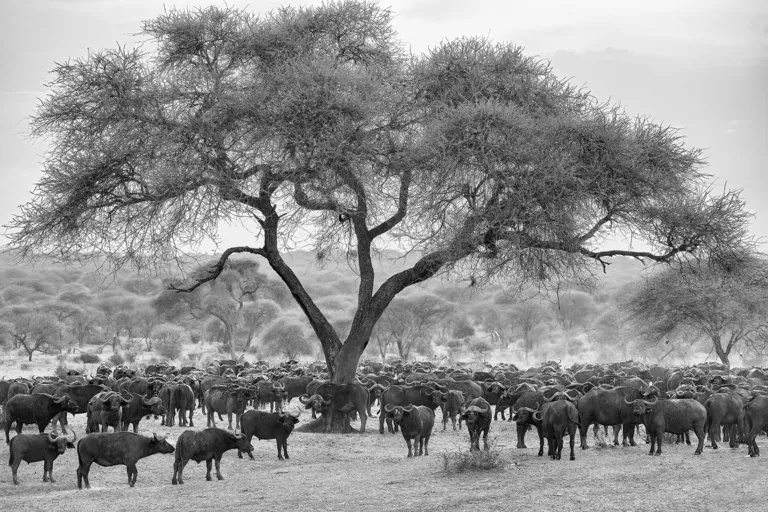
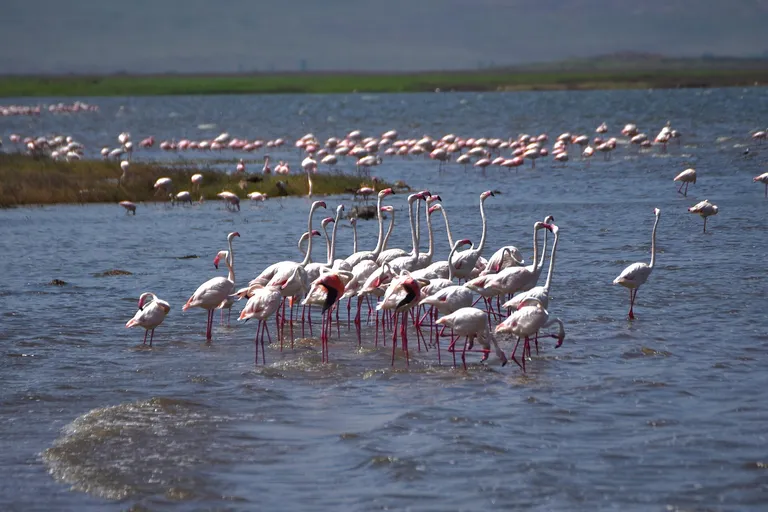
The crater is one of the best places in Tanzania to look for black rhino, although they are shy and usually seen at a distance. Lions and spotted hyenas are common, and you are likely to see buffalo, wildebeest, zebra, Grant’s gazelle, warthog and hippos at the pools. Large bull elephants wander the swamps and the Lerai forest. Flamingos gather on the shallow soda lake when water levels suit them, and the birdlife around the marshes is rich all year.
The crater is good in every season because most animals live there year round. June to October is dry, with clear views and the most visitors. The green months from November to May bring fresher scenery and fewer vehicles, with the heaviest rain usually in April and May. Whatever the month, the rim sits at well over 2,000 m, so mornings and evenings are cold. Bring a warm layer. See our Tanzania weather guide for more on the seasons.
The drive from Arusha to the crater rim takes about three to four hours on a good tarmac road through farmland and the town of Karatu, with the option of stopping at Lake Manyara or Tarangire on the way. Descending to the crater floor takes around half an hour down a steep, winding track. We aim to be on the floor early, when the light is soft and the animals are most active.
Ngorongoro sits naturally between Tarangire or Lake Manyara and the Serengeti, so it slots into almost every Northern Circuit route. Many travellers spend one full day in the crater, then continue west to the Serengeti or south to Ndutu in calving season. It also works well as a short safari after climbing Kilimanjaro, since it is close to Arusha and needs no flights. Have a look at our safari ideas to see how we build it in.
You have three broad choices. Lodges on the crater rim give you the view and the shortest drive down in the morning, but they cost more and the nights are chilly. Camps and lodges around Karatu, among coffee farms and forest about forty minutes away, are often better value and a little warmer. There is no accommodation on the crater floor itself, so every visit is a day trip from above.
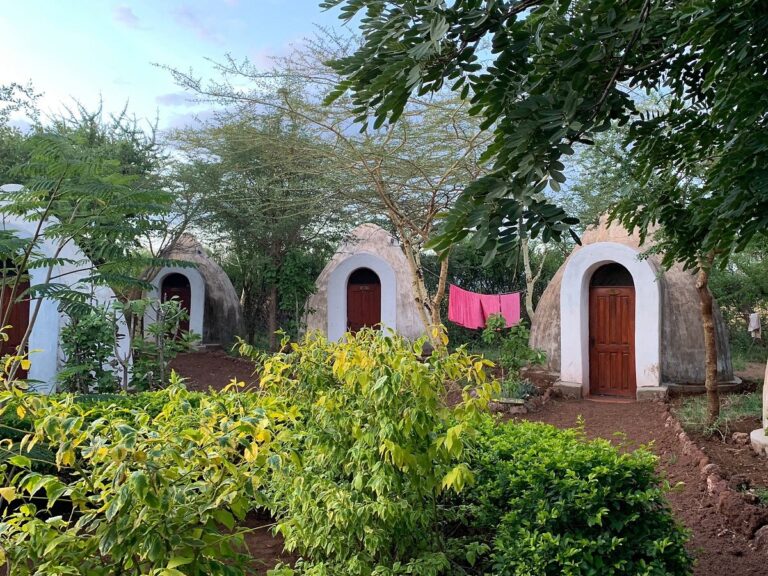
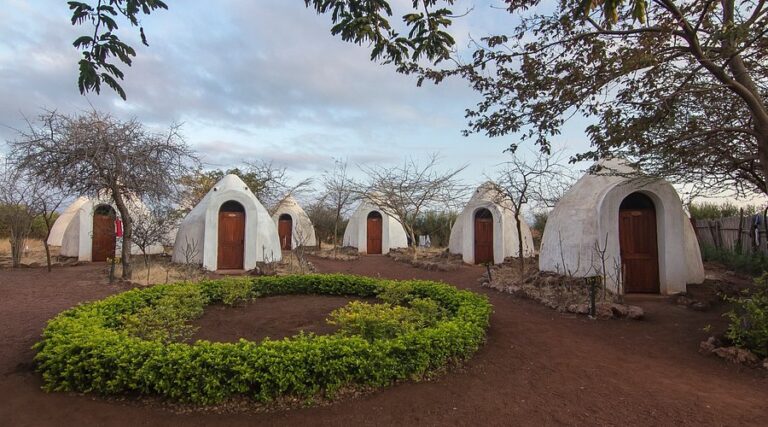
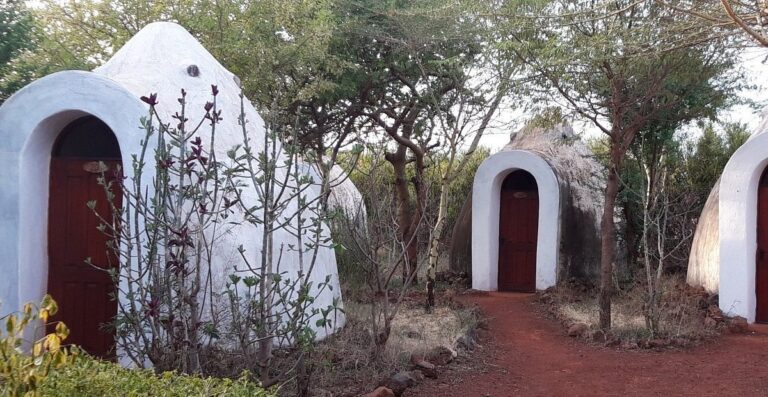
Panorama Safari Camp sits on the Rift Valley escarpment near Mto wa Mbu, with panoramic views over Lake Manyara. It is a budget base used at the start of a camping safari, well placed for Lake Manyara and the road north.
This is a basic camp offering simple beehive-style bungalows or permanent tents with shared bathroom facilities. Comfort is modest, and the appeal is the setting and the views rather than luxury.
There is a restaurant, a bar and a curio shop on site, and on a camping safari the crew handles tents and meals. It should be understood as a budget camp, not a lodge.

Serengeti Seronera Camp is a basic public campsite in the central Seronera area of the Serengeti, in the heart of the park’s wildlife. It is used on camping safaris for its central position and quick access to game drives.
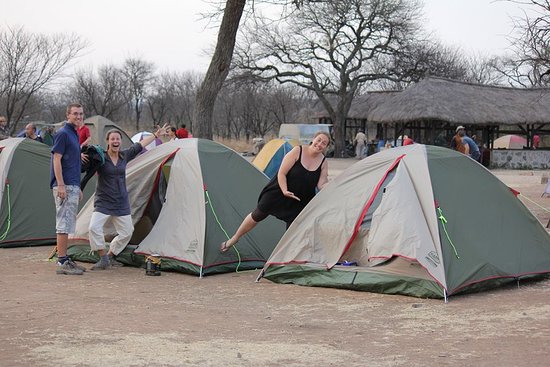
This is a shared public campsite rather than a lodge, with simple facilities and no hotel-style comforts. Guests sleep in the safari operator’s tents, and the site is shared with other groups.
Meals, tents and camp support are handled by the safari crew, not the campsite. It should be presented honestly as a budget wilderness camping stop in the middle of the Serengeti.