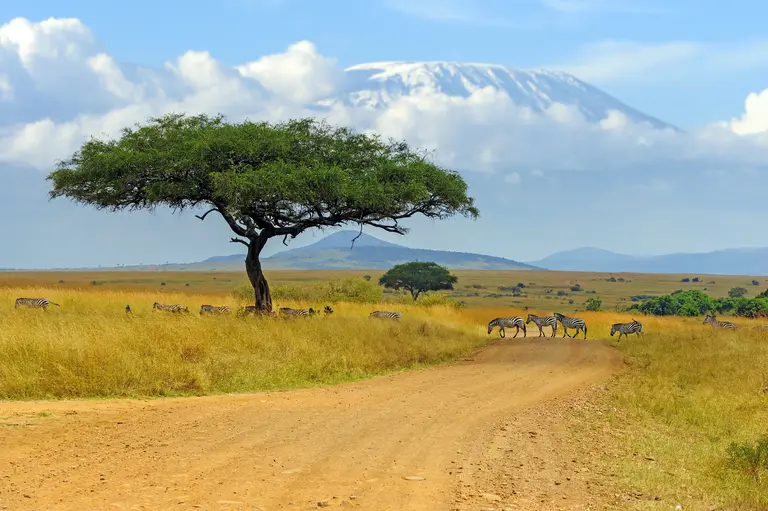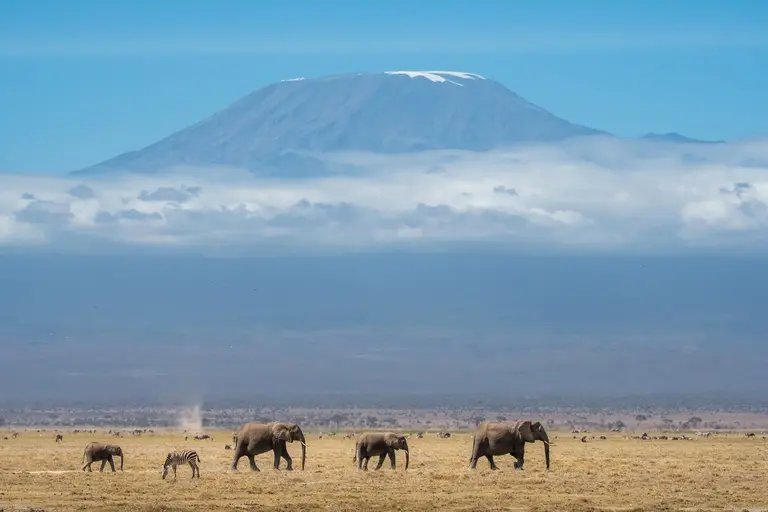
The classic Kilimanjaro climb. Six days up the scenic Machame Route, from steamy rainforest to the roof of Africa, with a sunrise summit of Uhuru Peak (5,895m).
The Machame route – often called the ‘Whiskey route’ – is one of Kilimanjaro’s most scenic and rewarding trails, and this six-day version is a tent-based camping climb rather than the hut-based Marangu route. The trail crosses several ecological zones, from tropical rainforest through moorland to alpine desert, with nights at the Machame, Shira, Barranco, Barafu and Mweka camps.
It is more demanding than the Marangu route but rewards trekkers with superb landscapes and a real sense of wilderness. On summit night the team sets out to attempt Uhuru Peak (5,895 m), the highest point in Africa; reaching the summit depends on your acclimatisation, fitness and the conditions on the day.
Drive to the Machame Gate (around 1,830 m) and trek through montane rainforest to Machame Camp. Overnight at Machame Camp (around 3,000 m).
Climb out of the forest into moorland, crossing rocky ridges to reach Shira Camp. Overnight at Shira Camp (around 3,840 m).
Ascend towards the Lava Tower (around 4,630 m) for acclimatisation, then descend to Barranco Camp beneath the Great Barranco Wall. Overnight at Barranco Camp (around 3,986 m).
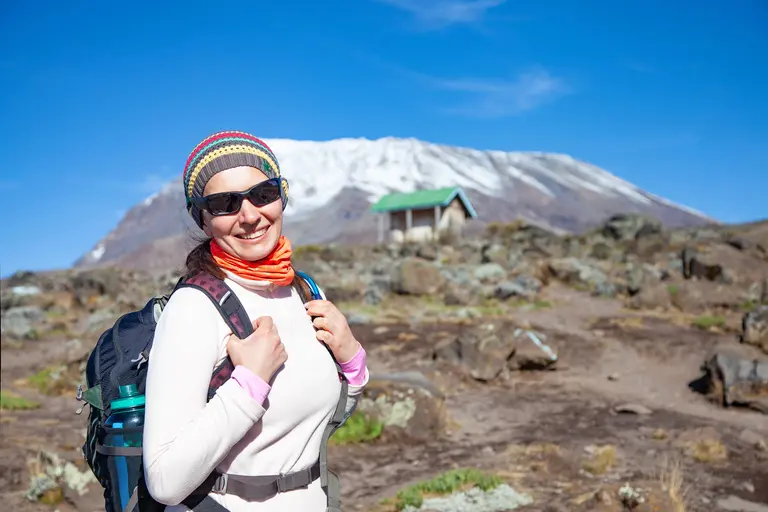
Climb the Barranco Wall and continue over ridges and valleys to Barafu Camp, the base for the summit attempt. Overnight at Barafu Camp (around 4,600 m).
Set out in the early hours to attempt Uhuru Peak (5,895 m), then descend by the Mweka route to Mweka Camp. Overnight at Mweka Camp (around 3,100 m).
Complete the descent through the rainforest to the Mweka Gate, then transfer back to Arusha.
Every day of this itinerary is tailor-made and can be shaped around your dates, pace and budget. When you are ready, our team handles every detail - you simply arrive and enjoy.
Kilimanjaro is a non-technical trek – no ropes or climbing skills are needed – but it is a serious high-altitude challenge. A good level of general fitness and some hill-walking preparation make it far more enjoyable. Determination matters as much as fitness.
Longer routes (7-8 days) give your body more time to acclimatise and significantly improve your summit chances. We help you choose the route – Machame, Lemosho, Marangu or Rongai – that best fits your experience, budget and time.
Your guides are trained in altitude first aid, monitor you twice daily with pulse-oximeter checks, and carry emergency oxygen. “Pole pole” (slowly, slowly) is the golden rule – a steady pace is the key to summiting safely.
Your climb includes park fees, mountain accommodation, all meals on the mountain, a professional crew (guides, cook and porters) and group equipment. Porters carry your main duffel; you carry only a daypack. We send a full packing list and can arrange gear rental.
The main seasons are January-March (colder, quieter, often clearer) and June-October (dry and popular). We generally avoid the long rains of April-May. Full-moon dates are popular for summit night.
A deposit secures your climb dates and permits; the balance is due before you arrive. Once booked we send a detailed packing list, training tips and pre-departure guidance.
Tell us your dates and what matters most - our team designs every journey by hand and replies within 24 hours, seven days a week.
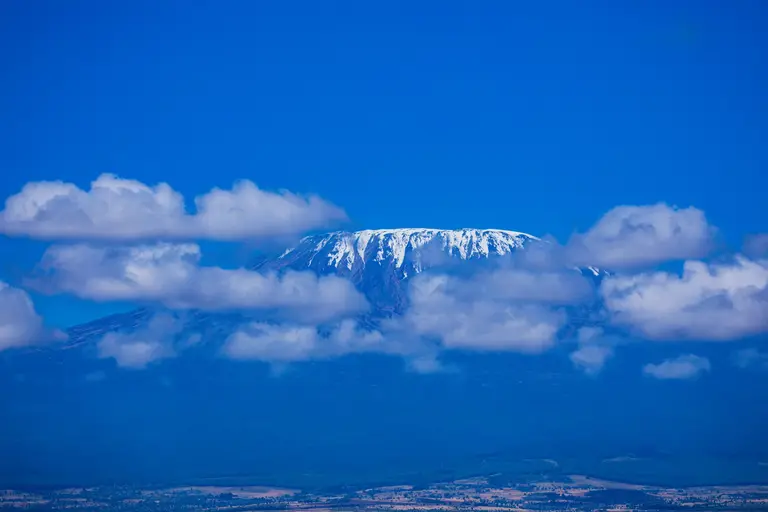
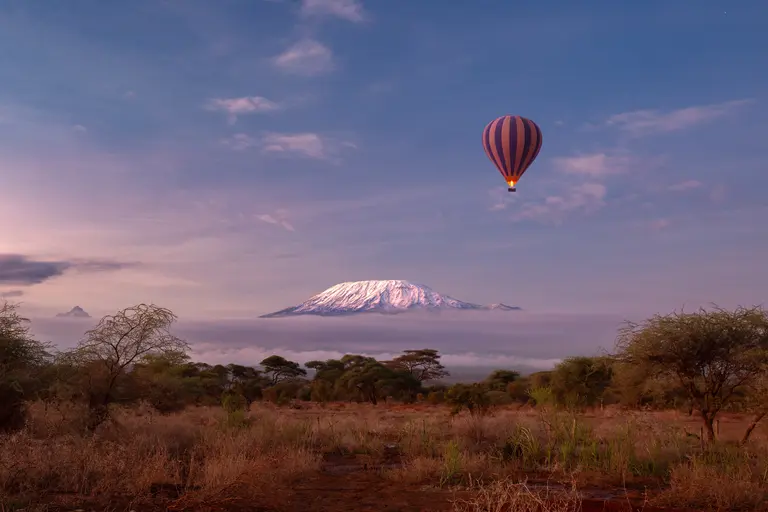
Mount Kilimanjaro is an iconic global landmark, standing as the highest mountain in Africa and the tallest free-standing mountain peak on earth. Its unique eco-landscape is a vertical journey through five distinct climate zones, starting in cultivated farmland and progressing upward through dense tropical rainforest, low alpine moorland, high alpine desert, and finally an arctic summit cap of permanent glacial ice. Climbers navigate this colossal volcanic massif via several designated routes, each offering a distinct perspective on the mountain’s topography.
The lower rainforest and heather zones host unique, specialized flora and fauna, including endemic Kilimanjaro impatiens flowers and colobus monkeys. As the altitude increases past 4,000 meters into the alpine desert, vegetation drops away completely to reveal massive, prehistoric giant groundsels and lobelias standing against the volcanic gravel fields. The ultimate goal is Uhuru Peak on the Kibo crater rim, where climbers stand alongside towering walls of ancient blue glacial ice to watch the sunrise over the African continent.
The core activity here is multi-day mountaineering trekking, with itineraries ranging from five to nine days depending on the selected route and required acclimatization time. Logistics require flying into Kilimanjaro International Airport (JRO) and basing out of the nearby gateway towns of Moshi or Arusha for gear checks and guide briefings. Accommodations on the mountain are strictly regulated, utilizing either public mountain huts on the Marangu route or mobile mountain tents pitched at designated wilderness campsites on all other trails.